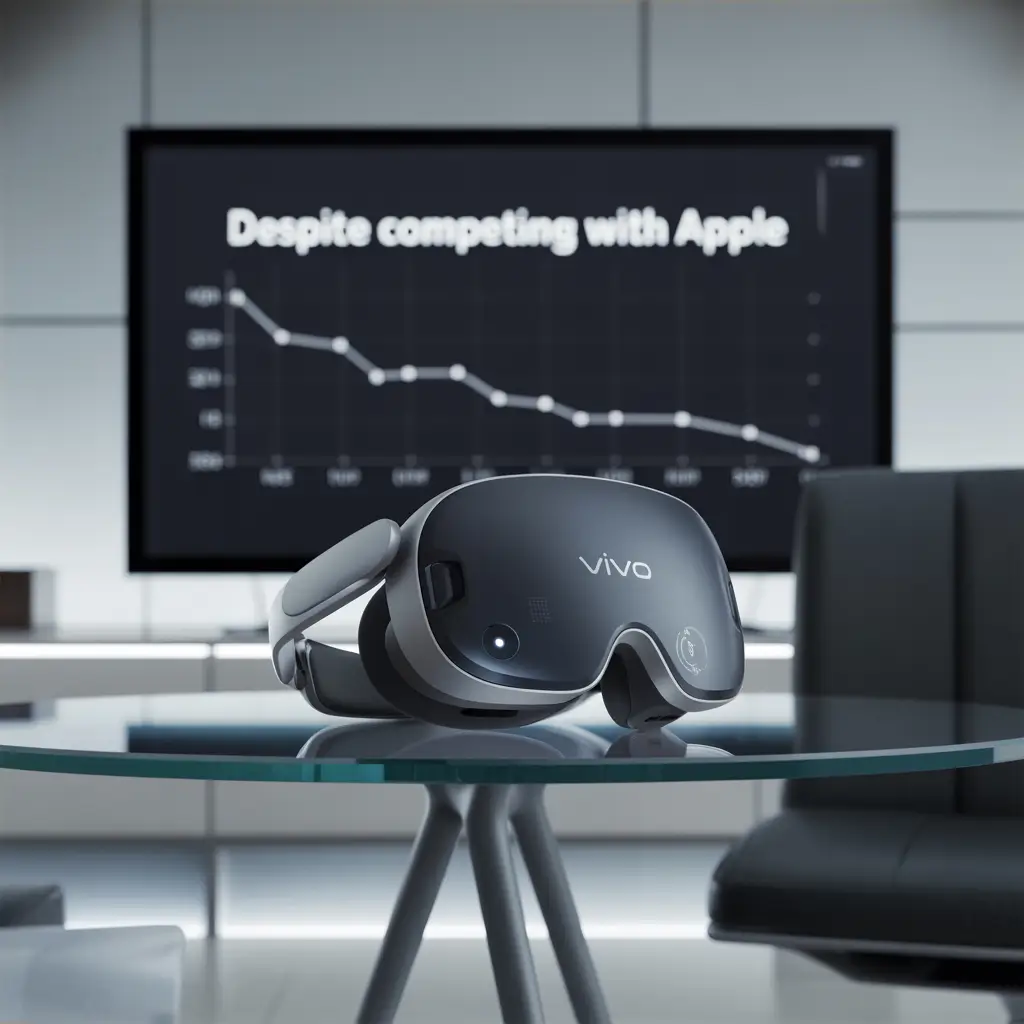
Many of the design components of Apple’s Vision Pro are also present in China’s Vivo Vision. Is the honeymoon ended, though?
A picture of the VR headset Vivo Vision
In China, Vivo imitations of Apple devices are common, and mixed reality headsets have just joined the fray. The Vivo Vision, a headgear that combines AR and VR and is very similar to the Apple Vision Pro, was released by Chinese smartphone manufacturer Vivo.
At its 30th anniversary celebration in Dongguan ,China, the company unveiled the Vivo Vision Discovery Edition, claiming it is “the first MR product developed by a smartphone manufacturer in China, positioning Vivo as the first Chinese company to operate within both the smartphone and MR product sectors.”
Currently only available in-store in mainland China, the Vivo Vision has downward-pointing cameras similar to the Vision Pro, a curved glass visor, and an external aluminum battery pack. It does, however, differ in a few ways, like having a 180-degree panoramic field of vision and weighing 398 grams as opposed to 650 grams for the Vision Pro.
Vivo’s mixed-reality operating system, OriginOS Vision, powers the Vivo Vision. A 120-foot cinematic screen experience, 3D video recording, and spatial images and audio are all supported.
In comparison to the Vision Pro, which costs $3,500, the beginning price in China will be comparatively lower at $1,395 (converted to US dollars).
The Vivo Vision might not have a significant impact on Apple’s financial results, even if it were made accessible in the US. The high cost of the Vision Pro has contributed significantly to its poor sales. Nevertheless, the market for headsets is anticipated to expand rapidly over the next years, and Apple is already developing additional iterations of the Vision Pro, including one that is less expensive than the original.
Tech influencer Jon Rettinger, who has over 1.65 million YouTube followers, says he isn’t yet too excited about VR and AR.
According to Rettinger, “it’s heavy, invasive, and without a must-have use case,” on site. “I believe there will be a major increase if the technology can go from goggles to glasses. However, it will remain niche as long as the existing form factors persist.
Despite not using the technology, the YouTuber is grateful that it exists. “The honeymoon period ended. It’s still a pain, and I usually return to my laptop for anything beyond gaming and content watching,” he remarked.
According to industry influencer Austin Evans, VR/AR headsets are still a bit of a buggy idea. Although the Meta Quest outperforms the Apple Vision Pro, Evans is indifferent to the cost, lack of content, and degree of comfort. “The Quest is such a better value proposition, and even there it runs into issues with long-term retention and ultimately living in a drawer once the honeymoon period ends,” he stated.
Disclaimer
This article is for informational purposes only. All product names, trademarks, and images are the property of their respective owners. Pricing and availability details are based on publicly available information at the time of writing and may change. The opinions quoted belong to the individuals mentioned and do not represent endorsement.