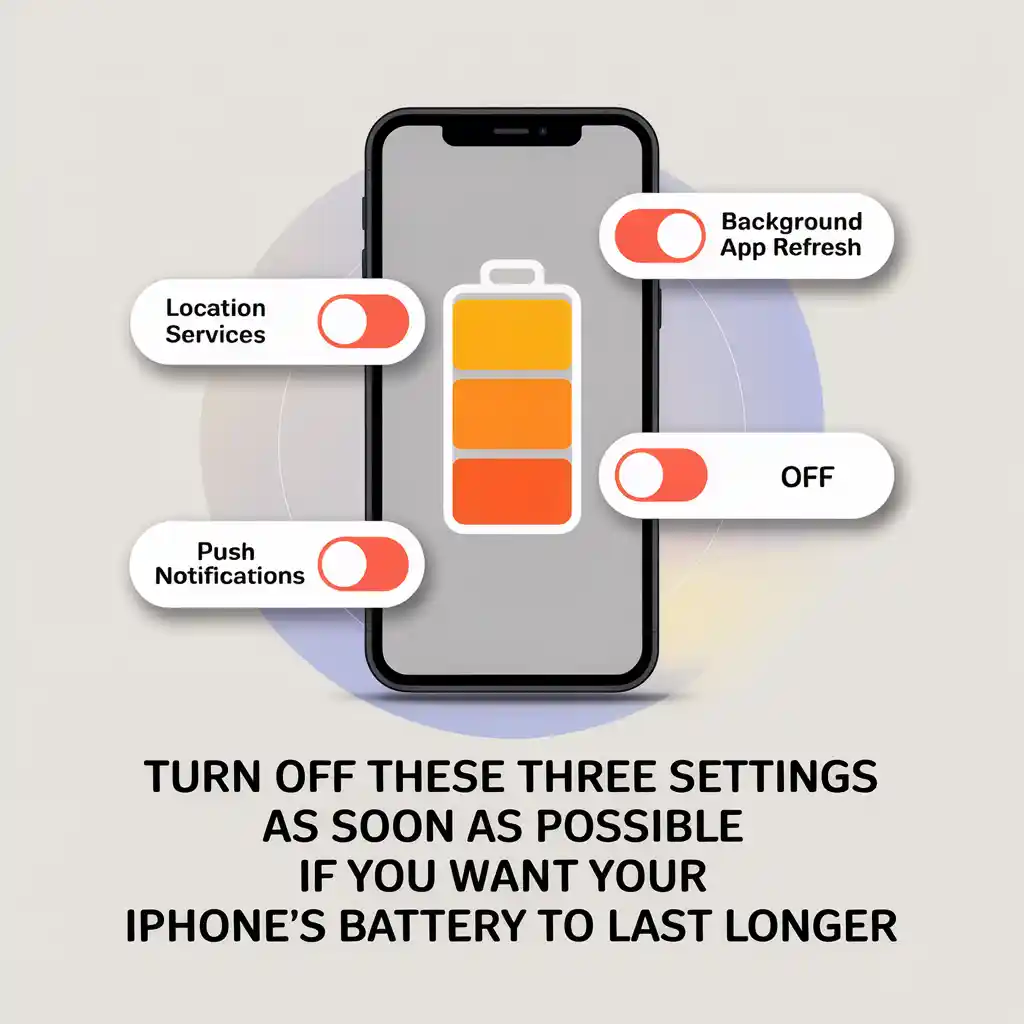
As you use your iPhone more, you’ll find that its battery life decreases compared to when it was brand-new. Phone batteries rapidly lose their capacity to retain a charge as time goes on. However, this does not imply that you must always charge your phone or use Low Power Mode. Even if your battery is a few years old, you may extend its lifespan by adjusting a few settings.
The last thing you want is for your phone to die at the worst possible time, whether you’re using it to send that final text, stream music, or seek directions. Spend a moment reviewing your iPhone’s settings rather than rushing to find a charger or putting it in Low Power Mode every few hours. It just takes a few seconds to turn off some power-draining functions, which could be the solution your battery has been longing for.
Additionally, you may monitor your Battery Health menu, which will display your battery’s health percentage (80% or above is regarded as healthy), the number of cycles you’ve completed, and if your battery is “normal.”
We’ll explain three iOS features that put a strain on your iPhone’s battery to varying degrees, and show how you can turn them off to help preserve battery life. Here’s what you need to know.
Disable the widgets on the lock screen of your iPhone.
Your apps are forced to run automatically in the background by all of the widgets on your lock screen, continuously retrieving data to refresh the information the widgets display, such as the weather or sports scores. Your widgets force these programs to operate in the background all the time, which means they continuously take up power.
Simply avoiding widgets on your lock screen (and home screen) is the easiest way to help save battery life on iOS 18. Changing to a different lock screen profile is the simplest way to accomplish this: To select a lock screen without any widgets, swipe around while holding down your finger on the one you now have.
Press down on your lock screen, select Customize, select Lock Screen, touch the widget box, and then click the “—” button on each widget to delete them if you only want to remove the widgets from your current lock screen.
It is advisable to simply change to a wallpaper without lock screen widgets if your battery is already low.
Cut down on your iPhone’s UI motion
There are several stylish and entertaining animations in your iPhone’s user interface. To just a few, there’s the smooth operation of opening and shutting applications and the splash of color that happens when you turn on Siri with Apple Intelligence. The slab of glass and metal in your palm comes to life thanks to these visual cues. Regretfully, they may also shorten the battery life of your phone.
The Reduce Motion feature may be used if you desire more subdued animations across iOS. Go to Settings > Accessibility > Motion and turn on Reduce Motion to do this.
Although they are entertaining, visual trickery like the parallax effect might shorten battery life.
Turn off the vibration on your iPhone’s keypad.
Remarkably, the iPhone’s keyboard has never been able to vibrate while you type. This feature, known as “haptic feedback,” was introduced with iOS 16. Haptic feedback vibrates each key as you write, making the experience more engaging than simply hearing click-clack sounds. Apple claims that the same function may have an impact on battery life as well.
The keyboard’s haptic feedback “may affect the battery life of your iPhone,” according to this Apple support site. The keyboard feature’s energy consumption is not specified, so it’s advisable to leave it turned off if you want to save battery life.
Thankfully, it isn’t activated by default. To disable haptic feedback on your keyboard, navigate to Settings > Sounds & Haptics > Keyboard Feedback and toggle off Haptic, if you have enabled it yourself.
Disclaimer
This article is for informational purposes only. The tips provided are based on publicly available features in iOS and are intended to help users manage their device settings to potentially improve battery life. Results may vary depending on individual usage patterns, device model, and iOS version. This post is not affiliated with or endorsed by Apple Inc.